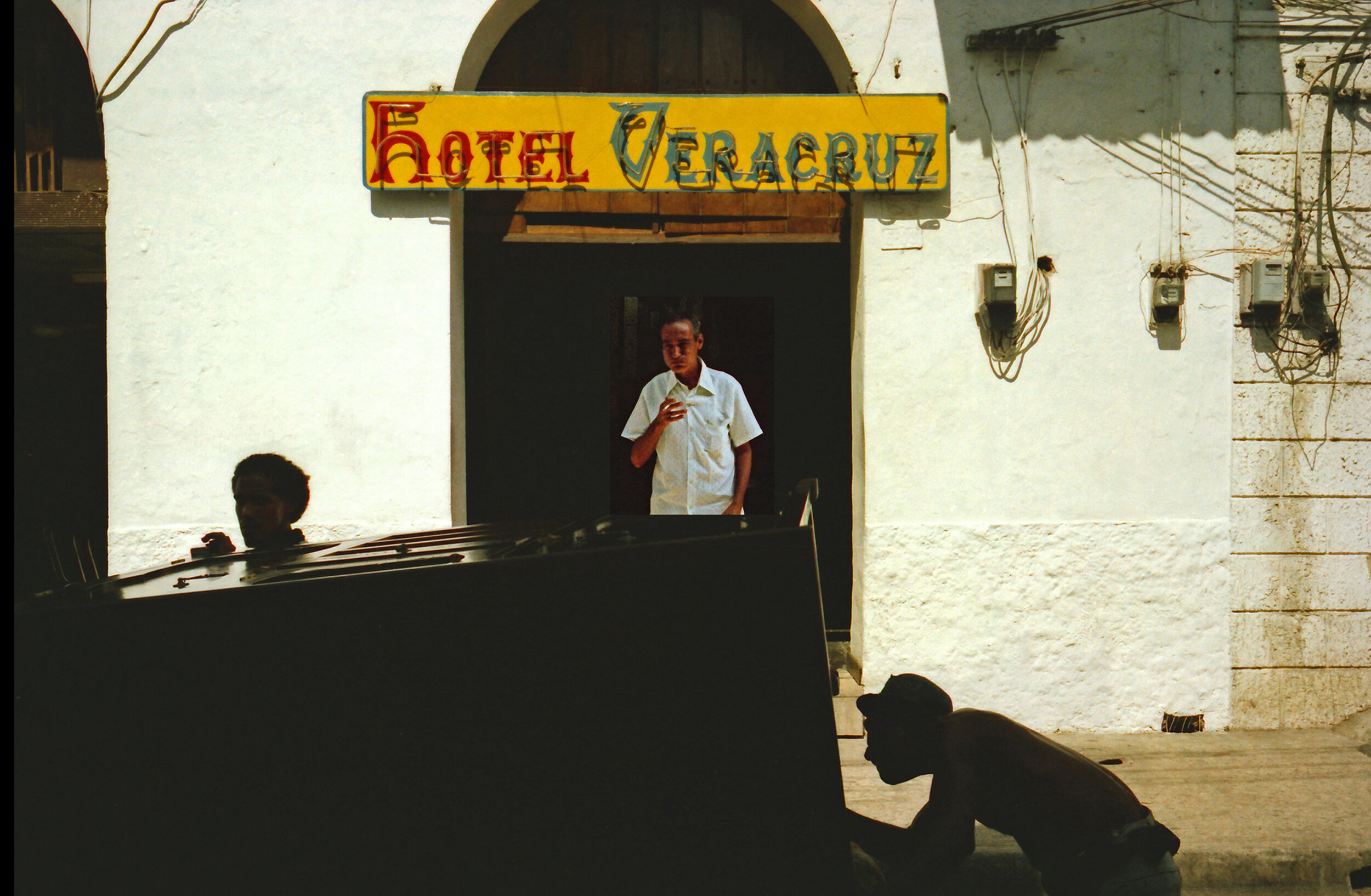
Hotel Veracruz
The first time that I stayed in a Hotel Veracruz was in Tampico, Mexico. It was located on a back street several blocks from the waterfront and fit our depleted budget. The rooms weren’t too bad but the bathroom was shared, men and women separated by a seven foot high wooden partition. Women’s voices could be heard as if they were in the same room. Tania and I had flown in, with Ramon and Sofia, on their Cessna 172 that had more hours on the engine than we would have liked. The four of us had been down to Chiapas visiting Mayan ruins and searching out Frans Blom, the legendary archaeologist. We met with Blom at Na Bolom, the house that he and his wife created in San Cristóbal de las Casas. He seemed frail and not well (he was to pass away several months after our visit), but he was gracious and gave us what time that he could spare from his research. I asked him if there was anything that he missed from New Orleans, our hometown and where he had lived from 1925 until 1940. He said that he missed his library that he was forced to sell in order to pay outstanding debts before he left the States for good. He also missed the Napoleon House Bar in the French Quarter.
At the time Tampico and the hotel looked relatively good to us because we had been socked in with bad weather for the previous two nights in Minatitlán, an oil refinery town with sulphur in the air. That evening, after an excellent seafood meal at a small restaurant near the Plaza de la Libertad, we walked along the Malecón before returning to our rather dismal accommodations. I don’t think that we were asleep for long when we were awakened by what sounded like a woman’s wailing followed by a gunshot in the room just below us. We lay in bed expecting to hear some commotion from below, but all was silent. After a short while, I got up and peered out of the window thinking that there might be some police or emergency presence on the street below. Other than a stray cat and a figure sleeping in a doorway, there was no activity.
The next morning, while dressing, I noticed a hole about the size of a bullet in the wooden floor. Directly above, on the ceiling, was another hole around the same size. Later, down in the small lobby while Ramon and I were checking out, I inquired of the same desk clerk, who had checked us in the previous evening, what took place here last night? He appeared puzzled by my question and asked what did I mean. I told him that we had heard a gun shot coming from the room below us. He responded with a deadpan expression, “No señor, I know of no gun shots.” I noticed that he was wearing the same soiled shirt from yesterday, and had not shaved, his face wearing an eighty-grit growth of dark stubble. Ramon nudged me, and at that moment, something told me not to mention the bullet holes in the room. In this country and situation, I knew that the less said is better. I returned the room key, and as he turned to hang it on a peg, I noticed the ivory handle of a revolver protruding from his side pocket.
When we joined the girls at the coffee stand across the street, they were drinking cafe de olla and munching on bunuelos. I glanced across the street back toward the hotel and saw another man standing in the portal, someone I had noticed sitting in the lobby when we were checking out. He seemed to be watching us with more than normal interest. Behind him, I could see that the desk clerk was now speaking to someone on the telephone. Sofia and Tania wanted to know what I had learned about the shooting. I answered their question by saying, “Just enough so that we should grab the first taxi we see for the airport. Vamos compañeros!”